Lifestyle, Transport

Adapting My Car for Hand Disability: Choosing Steering Aids

The aim: steering one-handed and driving without having to grip with the right hand. (Disclaimer, I have two hands, but one can’t be trusted to turn the steering wheel safely).

After some research on the Motability website and getting cleared to drive by the DVLA (see ‘Adapting my Car for Hand Disability: Timeline‘). I was ready to start adapting my car.

Choosing the steering aids

I did all my research online with the help of Motability online resources. If there hadn’t been a pandemic I would have preferred to try a range of aids in person as I had a bit of trial and error to find the best steering spinner and indicator extension. Steering spinners bolt onto the wheel and rotate so the driver can keep turning without letting go. An indicator extension allows control of the lever from the other side of the wheel. Having help to fit these tightly was essential as I couldn’t have done it by myself (thanks family). These steering aids, along with automatic transmission enable me to steer left-handed, while my right hand controls the indicator and windscreen wipers without the need to grip anything.

Not for me: The steering peg (£59 + £6 postage with VAT exemption, Alfred Bekker)
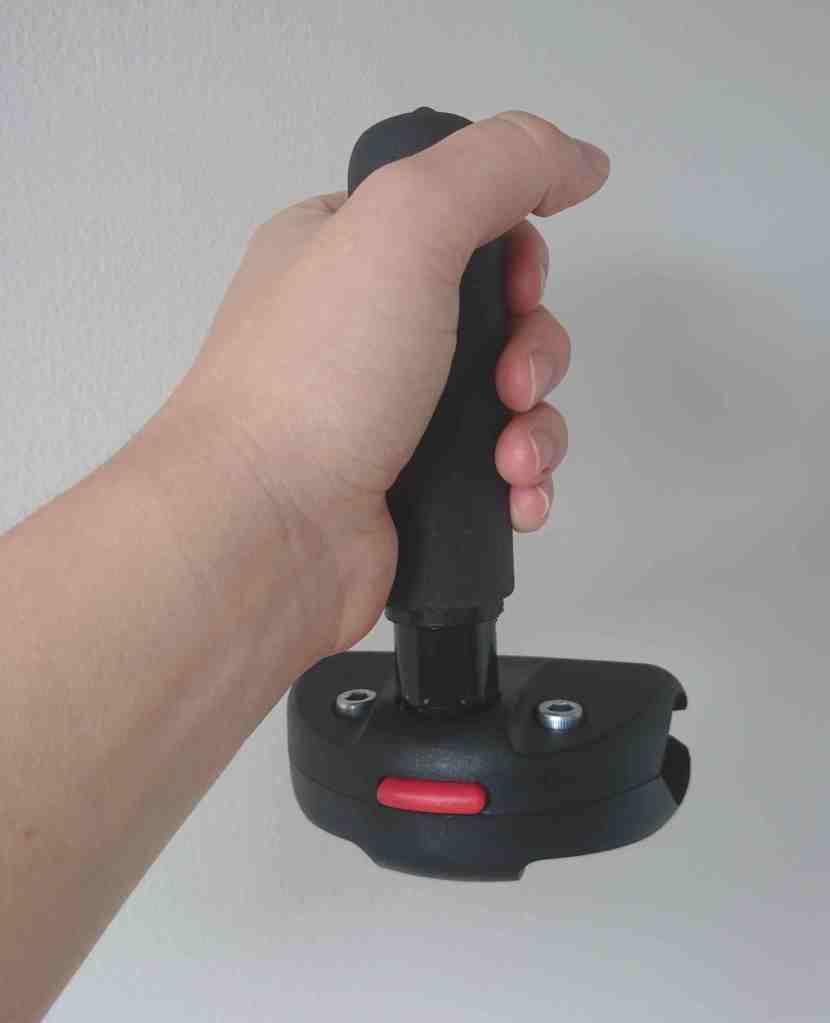
a hand holding the handle of a steering peg that is about 15cm long. It has a base which bolts onto the steering wheel
Alfred Bekker Steering Peg

I liked the quick-release feature, and it felt sturdy and well made. Unfortunately the angle for my wrist didn’t feel comfortable and it was difficult to turn the wheel by pushing upwards. It also stuck out from the steering wheel more than expected (~15cm) so I had to sit further back. This might not be such a problem if you have long legs. (Hex key needed but not included).

Other variants of steering peg exist, including a version with attached glove for extra support.

Budget choice: Steering mushroom (£12.99, Hypersonic on Amazon)

The wrist position for this one was much more comfortable and it was easier to push the steering wheel upwards by using the heel of my hand. The size was fine, even for my small hand. The head isn’t padded and feels a bit flimsy but the bolt on part is metal. I drove using it about 10 times and it didn’t slip on the wheel at all. there is some play on the spinner head itself which made it a bit difficult to make very small adjustments. Hex key included.
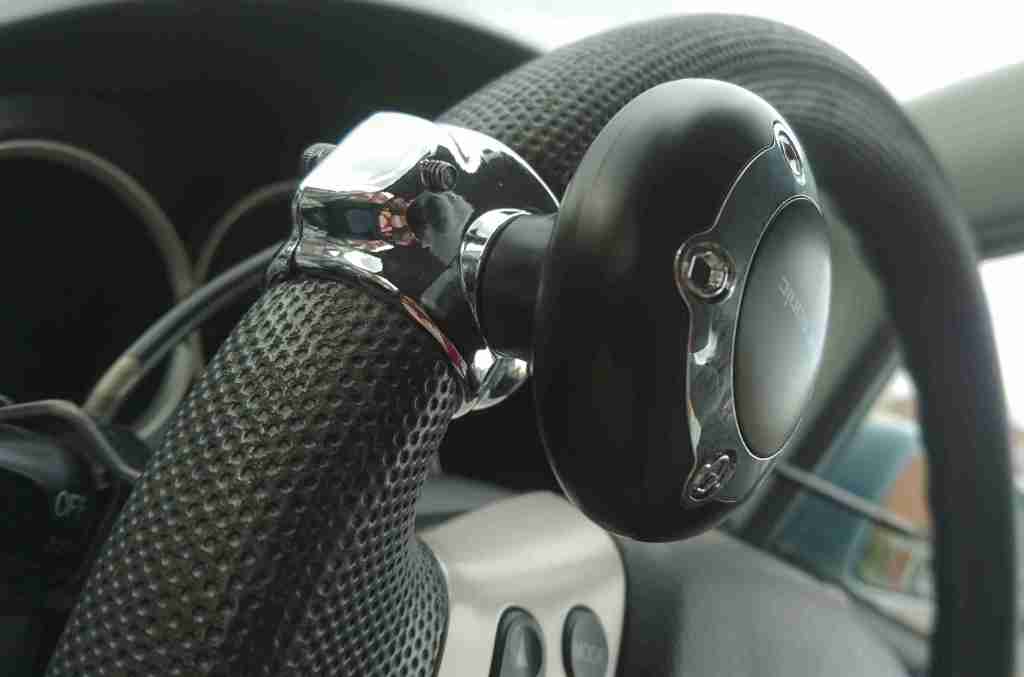
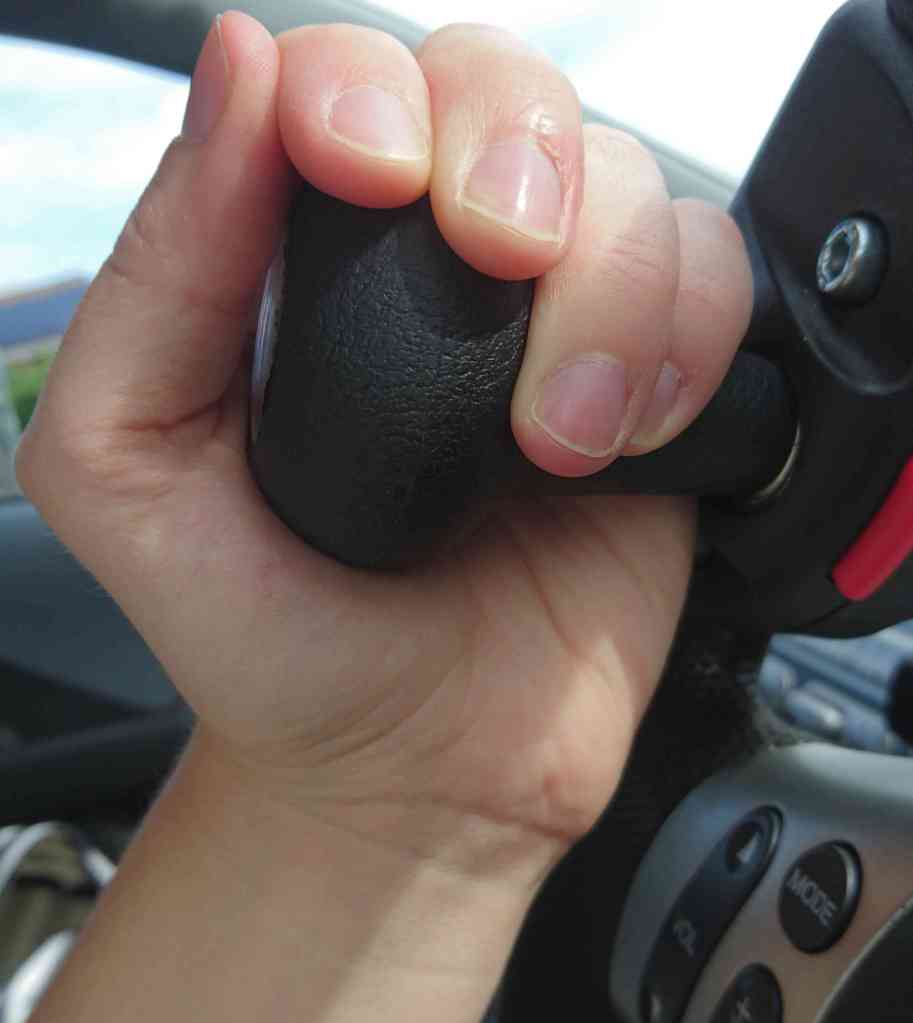
a steering knob attached to the steering wheel. It is bolted on
Hypersonic steering spinner
hand holding a steering spinner from the side
Alfred Bekker Steering Mushroom

Best investment: Steering mushroom (£59 with VAT exemption, Alfred Bekker)

The customer service team for this company were honestly so helpful and agreed to exchange the steering peg I’d bought for a mushroom one.  It felt more sturdy and hard wearing than the Hypersonic one and didn’t wiggle at all. I like the quick-release function in case someone else needs to drive my car and I want to remove it temporarily. It sticks out further than the Hypersonic spinner so it can be gripped from the top or the side. (Hex key needed but not included).

Steering spinner installation

This was a bit of an issue, each spinner came with minimal placement instructions. I originally thought the ideal place to install would be at the bottom of the wheel at 6 o’clock but it was actually 10 o’clock for me, steering left handed.

Indicator extension

Fitting this was a nightmare! The indicator extension comes as a long, straight wire that requires bending to fit it over the back of the steering wheel, to the other side. Someone strong had to do this for me using a vice and pliers. Again, it came with minimal instructions as all car indicator stalks are different. The indicator stalks in my car are tapered and the extension bolts on, so it kept sliding to the centre where there was no leverage for it to work. Attempts to pad the stalk with electrical tape were partly successful, until we had a hot day and the tape melted and everything slid off.

The solution was to cut some bike inner tube to the exact width of a thin, non-tapered part in between the twisting parts of the stalk controlling the lights. This allowed the extension to bolt on to the stalk without restricting the lights controls.

Wire extension (£25 with VAT exemption, Alfred Bekker)

When it was finally fitted it was great and worked just as hoped. It’s very easy to flick up and down and doesn’t require gripping. Fitting was incredibly difficult and time consuming (may be different for other vehicles) but there’s no better alternative in this price range.

The dream: Wirelessly controlled indicator and lights system. Price on application

Car functions like indicators and lights can be mapped to buttons on a steering spinner, or elsewhere in the car. I couldn’t find any prices for these online, and they require professional installation. This would be a big investment but I imagine with some customisation this would enable total one-handed control of the car if needed. I’ll be sticking with my £25 alternative for now though!

The Finalised Setup
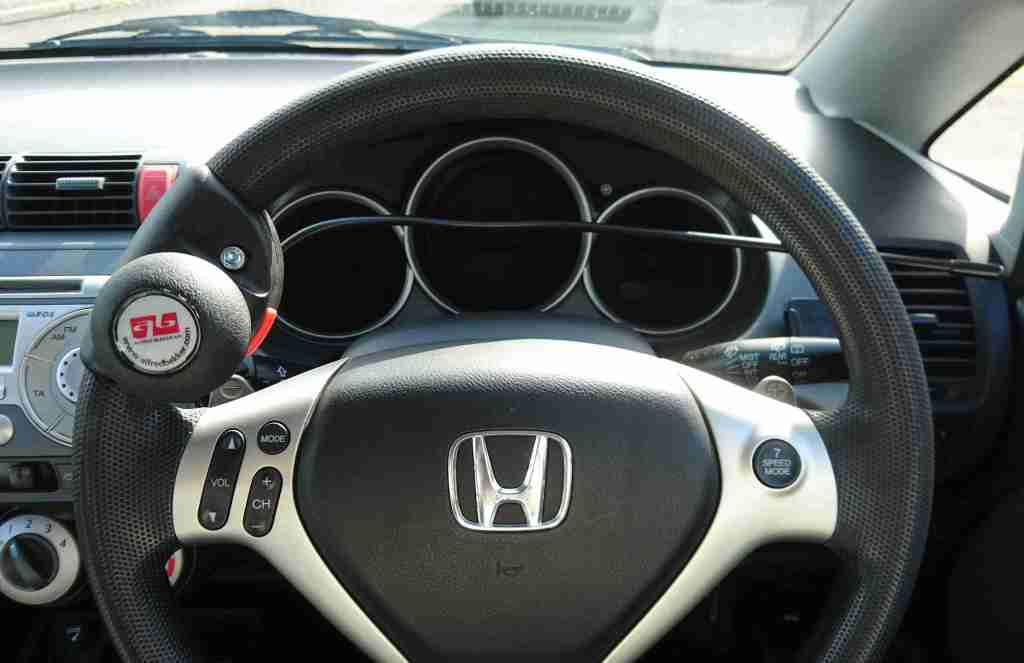
view of steering wheel with steering knob and indicator extension

Top tips:

  • Research and try things out if you can
  • Allow some time to get things fitted correctly
  • Get help with the installation

New Update! Driving One-Handed: Six Months On

Advice for hiring a car: Which Car Hire Companies Support Drivers Who Use Steering Aids?

This was not a sponsored piece.

Lifestyle, Transport

Adapting My Car for Hand Disability: Timeline

My main barrier to driving was the instability in my right wrist which can cause sudden subluxation or partial dislocation when I put pressure through it. It didn’t feel safe steering while turning so I decided steering left-handed was the way to go.

Self-assessment and research

I wasn’t eligible for the Motability scheme, but I found their guide to different adaptations (PDF link) useful and easy to understand. This gave me some idea of how I would be able to adapt a car and what I’d need- automatic transmission, a steering spinner, and some form of indicator adaptation.

Under normal circumstances I’d have liked to have gone to an assessment centre and had the chance to try things out in person, but it was too difficult with lockdown. Instead I looked at product catalogues and videos online to get some idea of how things would work.

DVLA declaration

I had a full driving licence, although I had stopped driving since I became disabled through injury. To get driving again, I had to declare my disability to the DVLA as I would now need adjustments to drive safely. Neuroma and wrist instability aren’t pre-defined diagnoses on the government website, so I had to fill out a form for upper limb disabilities. I had to provide my doctors’ contact info, a brief explanation of how I’m affected and the vehicle adjustments I would need to drive safely. The form had to be sent off by post with my old driving licence.

Wait time: 6 weeks

My licence was amended and returned to me, complete with new restriction codes. I was allowed to keep driving! The new restriction codes stipulate that I can only drive a car which is automatic with steering adaptations.

The car

I wanted a smallish car that would still be safe and reliable. It had to be automatic which really narrowed down the options. Luckily I had some great family advice and found a second hand Honda Jazz that ticked all the boxes: automatic, light steering and good enough visibility for a short driver.

Car insurance declaration

When buying car insurance there’s a section to declare any modifications that have been made to the car. The example given will be something like a bigger exhaust but this can include aids for disabled drivers. My insurer (Admiral) said I did have to notify them, and I was able to do this easily over their webchat.

Choosing and fitting steering aids

This was easier said than done, especially during a pandemic. It needed its own article, coming later this week.

Summary of my steps:

  • Needs assessment and research

  • Declared disability to DVLA (6 weeks for a decision)

  • Bought a car

  • Declared adaptations to the insurer

  • Bought and fitted adaptations

  • I’m good to go!

If in doubt, talk to the DVLA, or call an adaptations centre for advice

Links to Resources (links open in new tab):

  • Motability adaptations guide- PDF link
  • DVLA homepage for reporting medical conditions- Link

Hobbies and Sport, Lifestyle, Work and Study

Welcome to ‘I’m Handling It’

‘I’m Handling It’ is a project documenting hand and wrist adaptations that hopes to be a source of ideas and resources for others.

Hi, I’m Hope! I’m a part-time research postgrad student living in the UK and writing my thesis from home. I have wrist instability and chronic pain caused by nerve damage from a road accident, both on my dominant side. After surgeries and physical rehab I’m now investing time into adapting all aspects of life to get my independence and old hobbies back. This usually involves trying to adapt things for one-handed use.

What will be on the blog?

I’ve especially missed playing instruments, baking, doing art, and crafting so will be looking for ways to make these things more one-handed friendly. Around the house I’ll be looking for adaptations and hacks to make cleaning easier, and for recipes and food preparation techniques that are easy to do one-handed. The successes, failures and recommendations will be published here in the hope that it can help others looking for advice.

I also want to share what I’ve learnt from being a disabled student at university and the adaptations that have been helpful so far. I am a Biochemist/Immunologist who used to work in a lab, but for the past year my work has been computational so I have made lots of changes to my computer set up and the technology I use.

I especially want to learn from other people experiencing upper limb disabilities and hope to feature interviews to talk about their experiences and advice. It would be great to highlight adaptation and disability services that already exist for all kinds of upper limb disabilities and injuries, and to bring them together in one place. If you have any suggestions for things you’d like to see, or to propose a submission or collaboration, please do get in touch here.